

Interview overview
Why Hiroshi Chose CICCC’s Mobile Track in Vancouver
A Japan-trained programmer who rarely used English at work enrolled in Vancouver’s co-op college focused on mobile apps—adding smartphone skills he never got on the job at home, and a softer kind of growth alongside the code.
Hiroshi arrived in Vancouver already a programmer, but not the kind of programmer he wanted to become abroad. After university in Japan he wrote software for a living, yet English almost never entered the day. He wanted both language immersion and technical growth, and he treated study abroad as the way to get them. The Philippines appeared on the shortlist until “English as a second language” started to feel like the wrong setting. Tuition gaps of roughly three to four hundred thousand yen and North American workability nudged him toward Vancouver even though he had not begun with that city as a fixed dream.
CICCC offered two months of free ESL, enough for him to clear the program’s English bar without a separate language school. Drama had already made English feel alive; IT vocabulary, much of it English to begin with, proved less frightening than casual speech. He passed the entrance test, then used mornings for extra speaking practice because classes ran in the afternoon. In his field, communication was manageable; outside it, he kept pushing.
He chose CICCC because it was the co-op school in Vancouver specializing in mobile app development—Android, iOS, and the web foundations those paths need. In Japan he had been curious about smartphone apps without a chance to build them; pairing that interest with his web background looked like a job-market plus. The curriculum opens with about four to five months of web work before mobile, which he found transferable and carefully paced for beginners even as his experience let him see where lessons were heading. Design coursework helped more than he expected. Android and Java were underway when interviewed; Objective-C still ahead and eagerly awaited.
Pace can feel brisk—“we taught it, now you do it”—and small classes bring teachers close while limiting native English contacts compared with larger public campuses. Weekday homework leaves weekends freer for review, teacher feedback, morning English school, friends, and the city’s food crawl across cultures. Eight months in, he had barely left Vancouver except for a Las Vegas trip and World Cup watching with friends.
Originally he imagined a Canada internship feeding Japan career growth; lately the wish to keep working overseas has grown stronger. Soft skills—joining Canadian communities for meals and drinks—matter as much as the next stack. At publication he was still studying, not yet hired, with the CICCC internship as the near-term proving ground.
His message is simple: you will not know until you try. He was terrified before IT school despite prior experience; trying anyway produced the “somehow it worked” confidence he now carries into mobile development as a new field.
At publication he was still a student on the mobile track rather than a hired engineer—the interview’s value is the mid-journey honesty of someone adding Android and iOS on top of Japan programming without pretending the job offer has already arrived.
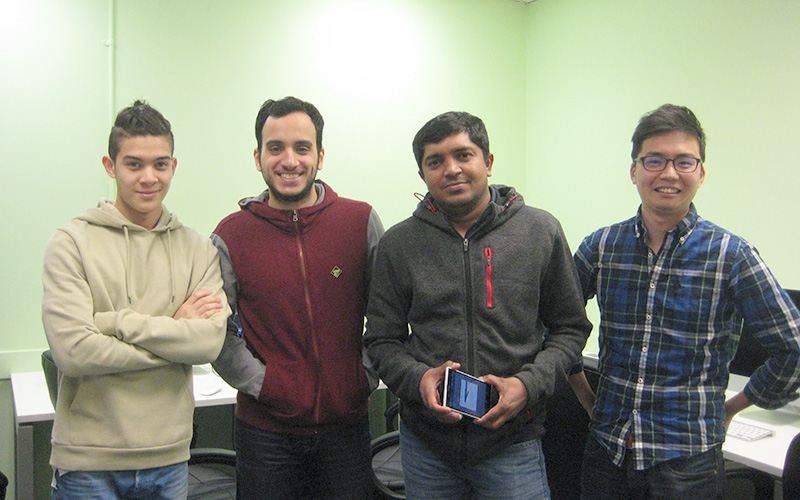
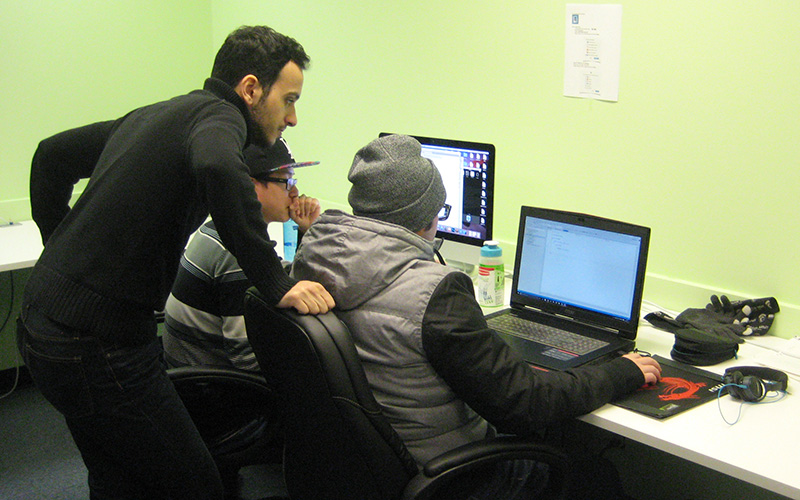
Photos from the interview

This page is an English overview of Frog’s Japanese interview—not a full translation. Read the original interview (Japanese)