

Interview overview
The College Project Post That Hired Kana in Vancouver
A Japan front-end lead who delayed a COVID-era plan used CICCC study to stretch beyond her stack—then watched an X post about a school-built app spark the referral that became a local front-end job in about twelve months.
Kana’s Vancouver hire did not begin with a cold application blizzard. It began, improbably, with visibility around a college assignment. Attributes mark her as an experienced front-end engineer who took roughly twelve months from the Canada path to local employment. Behind that number sits a Japan career that already carried lead weight—and a pandemic pause that forced the plan to wait.
She entered engineering sideways. Hotel reservations work at a foreign-branded property came first; roughly three months of Progate and Udemy self-study, aimed deliberately at front-end over backend to get hired faster, opened the door. Across about two years and five months of Japan engineering she progressed to lead front-end at Relic, then declined a manager-track offer to keep Canada possible. A 2019 overseas plan stalled under COVID after she already held an English score of 5.5 and had paid school fees.
When movement returned, she arrived in April 2023, took one month of ESL, and started CICCC in May on a one-year study plus one-year co-op structure. School goals were not only repetition of Japan strengths. She wanted deeper backend and full-stack range—Node.js and React intensified around September—plus volunteer and part-time work at a colleague’s startup. She treated school projects as portfolio, not throwaways, and says she would not redesign the path as working-holiday only.
Formal search began around February 2024 with resume coaching from Frog mentors and a Canadian partner. Somewhere in the build cycle she posted about a school-made app on X (Twitter). A Japanese professional already inside a Canadian company messaged; referral energy turned into the front-end role she held when interviewed. Employer name stays out of the piece; the mechanism does not.
She is frank that a Japan lead title helped confidence without magically dissolving Canada interview nerves or English friction. Fuller-stack signals still mattered for the local market even after Relic.
The story’s charge is timing plus proof: delayed departure, focused college production, and public sharing of what she actually built. For readers hunting abroad roles after real Japan product years, Kana’s arc argues that the missing piece may be less “more applications” than “let the right people see the work you are already doing in school.”
Volunteer and part-time work at a colleague’s startup during school added Canadian texture beside CICCC projects. She still frames the X post not as a gimmick but as the natural end of treating assignments as real products worth showing—an approach that converted one inbound message into a Vancouver front-end seat about a year after arrival.
That inbound path also reframes what “experienced” means abroad: Relic lead years bought confidence, not automatic Canadian trust. She still had to show fuller-stack range, take ESL seriously for a month, and treat February 2024 search prep with mentors as real work. The referral closed the loop; the prior year of deliberate expansion made the loop worth closing.
Photos from the interview
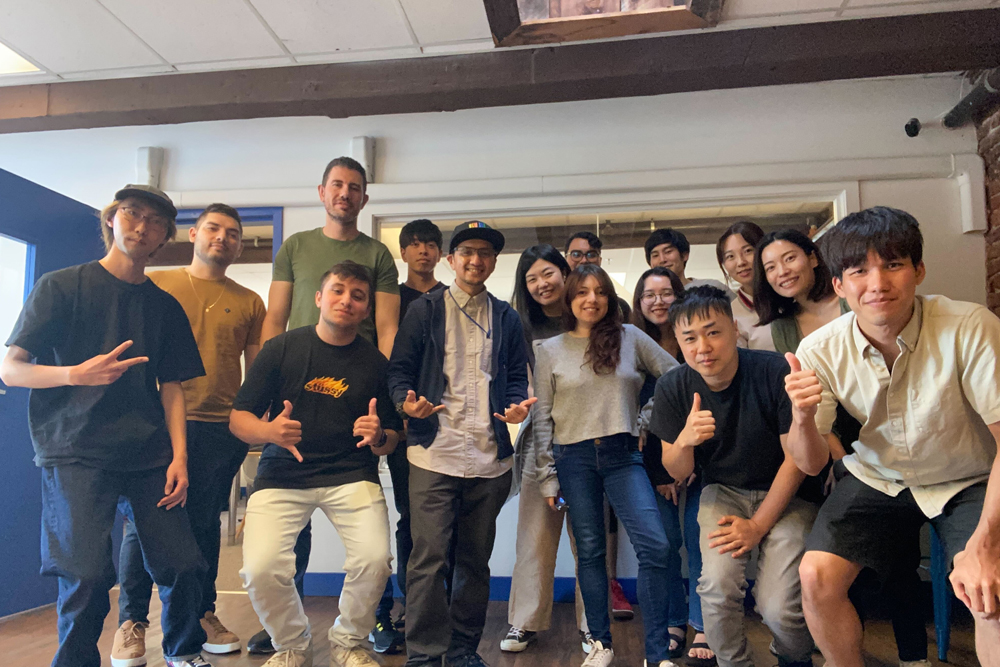
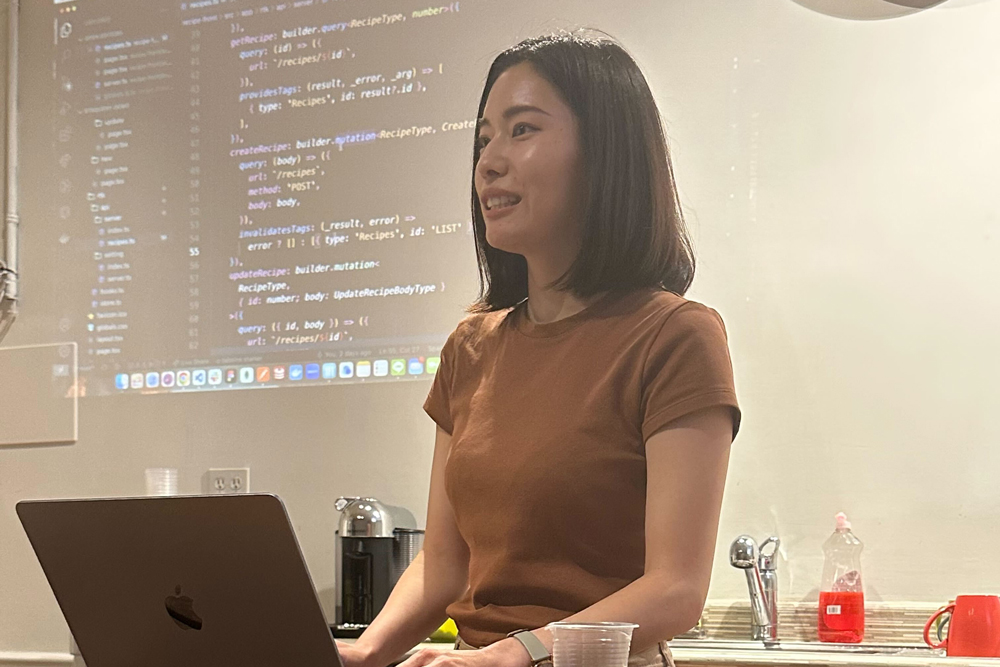
This page is an English overview of Frog’s Japanese interview—not a full translation. Read the original interview (Japanese)