
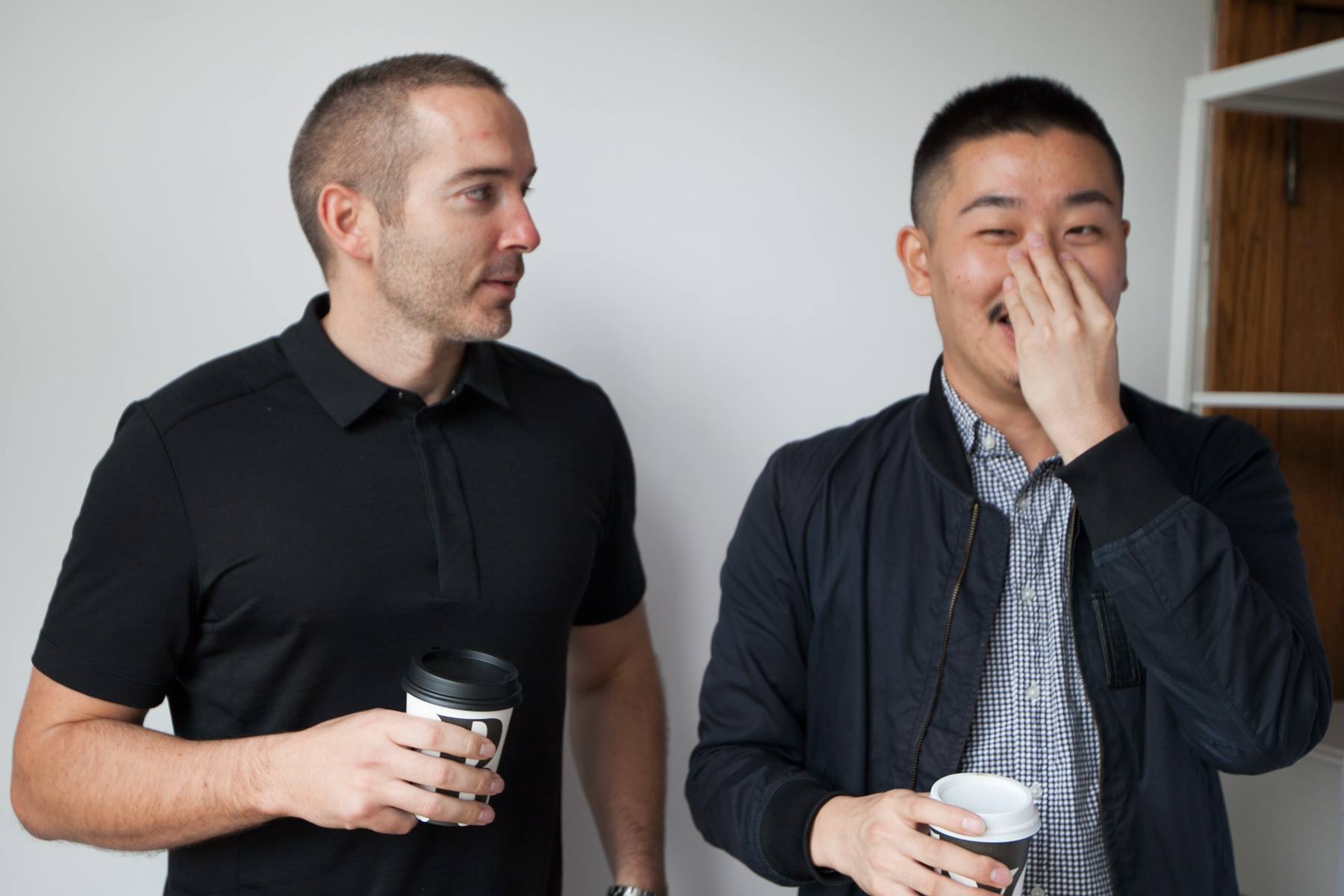
Interview overview
Motoki left Japan’s rails early—and let a portfolio do the talking
After ditching mass recruiting for Philippines English study, a short Japan web-design job, and Vancouver college, Motoki locked a frontend seat at a web production company during co-op—largely on the strength of what he could show.
Motoki jokes about being a “yutori” twenty-six-year-old, then describes choices that are anything but soft. A two-month Philippines stay in university third year left him hungry for more English; he told his parents he would skip Japan’s mass job hunt, worked until graduation, and returned to Baguio for a hard, small-group, half-year program known for teacher quality. Speaking improved enough to expose the next gap: English alone was not a career. A correspondence web-design program followed because he liked making things and dreamed of working while traveling.
Japan employment as a web designer lasted about six months—long enough to feel hours, hierarchy, and misfit—before he quit for Vancouver against another wave of parental resistance that eventually turned into financial support so fresh skills would not decay in unrelated work. Frog blogs had already sold him on co-op plus working-holiday sequencing; Vancouver was the only city on the list because Japanese developers were already proving the path in public.
College, he agrees with peers, was weak on teaching—early presentations, then long self-study blocks while instructors vanished between multi-class duties. He treated it as a tool, decided front-end about three months in after Frog talks (animation and the puzzle of code becoming a rendered page felt like magic), and studied Treehouse, Udemy, and Egghead against real job requirements while classwork drifted backend. Japanese classmates shared the self-study ethic; others mostly complained.
Job search started a month before co-op; the first two weeks he sent one application and waited. Week three he flooded Indeed and a classmate’s agency list—nine resumes total, three interviews in mixed formats (in-person, phone, Hangouts), one late reply declined after he had already signed. The hire felt portfolio-first: matching resume design, a director who already seemed sold, salary settled in one “minimum you’d accept?” exchange. Japan’s six-month title barely came up.
Day to day he owns front-end and WordPress customization on a one-developer-per-project model, coding before designs fully freeze so clients can react in short loops. Workload feels denser than Japan even when the emotional load is lighter and opinions travel flat to managers. He wants animation craft that matches designer ambition, eyes Toronto, Montreal, even France someday, and treats permanent residency as luck rather than destiny. Watching his boss skim candidates taught him the local rule: experience paragraphs lose to “what can you do now,” which is exactly how a short Japan tenure can still win.
He still studies animation techniques that match ambitious designer requests—the rare overlap where company direction and personal curiosity agree. Permanent residency sits in the “lucky if it happens” bucket because multi-country movement still appeals. Failure, he argues, is a Japan-shaped word for experiences that still compound. That worldview is how a six-month Japan title and a portfolio obsession beat longer résumés that never get clicked.
Photos from the interview

This page is an English overview of Frog’s Japanese interview—not a full translation. Read the original interview (Japanese)