
Interview overview
Nanaho’s first full-time job was in Canada—after 250 applications
Straight from high school into Canadian study, derailed by a COVID college closure, Nanaho finished BCIT design essentials and fought a six-month search to become an in-house graphic designer at a B.C. digital-signage company.
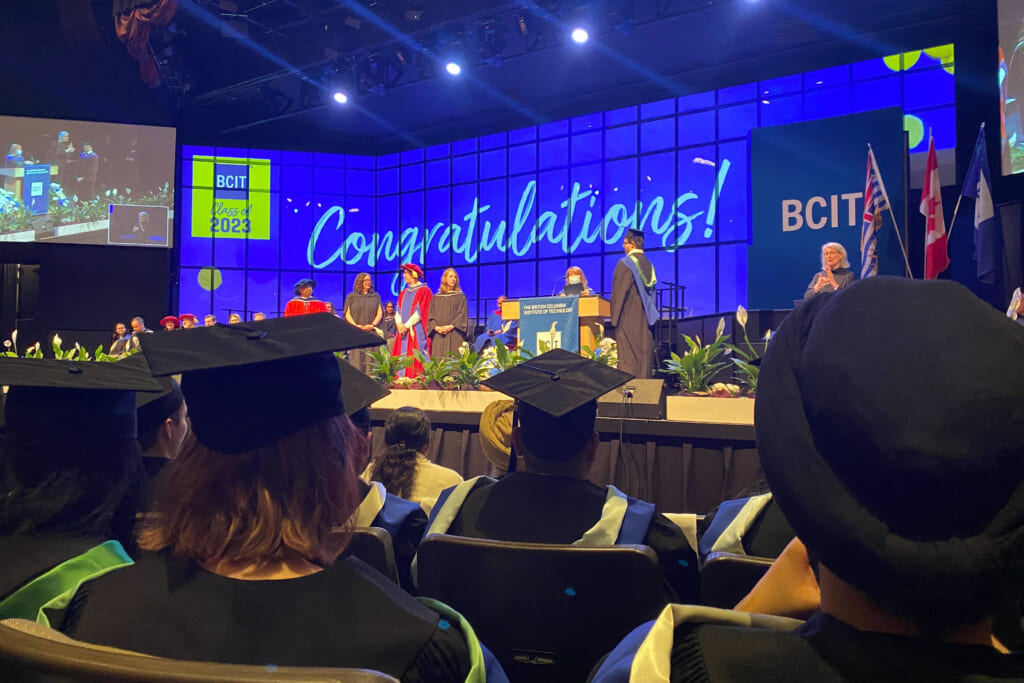
Nanaho is an outlier even inside Frog’s unusual crowd: no Japan full-time résumé, just a student who decided overseas life needed a portable skill. Coding curiosity in high school softened into a love of design after research; she aimed at web design, then watched the planned college shut in COVID while she was still in a pathway language program. About three months of academic English study split around the shutdown, a year and a half back in Japan saving money and studying, waitlists for popular BCIT seats, and a September 2021 return into Communication Design Essentials. She graduated around September 2022 as a graphic designer more than the web path she first imagined.
Parents doubted until persistence earned a “do it yourself” blessing and redirected funds once meant for Japanese higher education. After graduation she spent a first month finishing portfolio and social presence, then applied with volume—often three to ten roles a day, more than 250 total—while café shifts paid rent. Formal interviews were scarce (about three plus a couple of phone screens). Classmates were mostly locals or internationals with soft landings; few shared her visa urgency, which made the loneliness sharper. Networking events felt high-walled without experience confidence.
The role that broke the drought arrived via Indeed and a single Zoom that was mostly the company explaining itself, with portfolio already reviewed. She started around early April after a mid-to-late March yes that felt surreal after months of no. The employer builds digital-signage software and hardware; as one of three in-house designers on a freshly rebuilt team (the prior director left soon after she joined), she makes social banners, blog images, packaging, YouTube promos, and client menu boards and waiting-room screens—Photoshop, Illustrator, After Effects, Premiere—while developers own the systems and a CEO’s assistant brokers communication in a roughly fifteen-person company that is mostly remote except shoot days.
Language remains the daily friction: translating design intent for non-designers, catching nuance, bridging Japanese minimal taste with Canadian “make it pop” preferences when the physical screen is invisible until install. She wants stronger motion skills the BCIT still-image focus never drilled. The emotional lesson she kept repeating to herself: as a foreigner you cannot merely match local effort—you focus on your own lane and keep moving.
A year in, she still wants fundamentals sharpened on a director-less young team that works peer-to-peer with a CEO’s assistant as messenger. Motion and video remain self-taught edges she intends to thicken. When feedback loops fail in English, she re-confirms verbally and supplements with images and references—designer-to-designer talk is easier than translating taste for everyone else. The emotional engine of the piece is endurance after a COVID detour stole eighteen months: apply anyway, compare yourself carefully, and remember the yes can arrive abruptly after hundreds of nos.
Photos from the interview
This page is an English overview of Frog’s Japanese interview—not a full translation. Read the original interview (Japanese)