
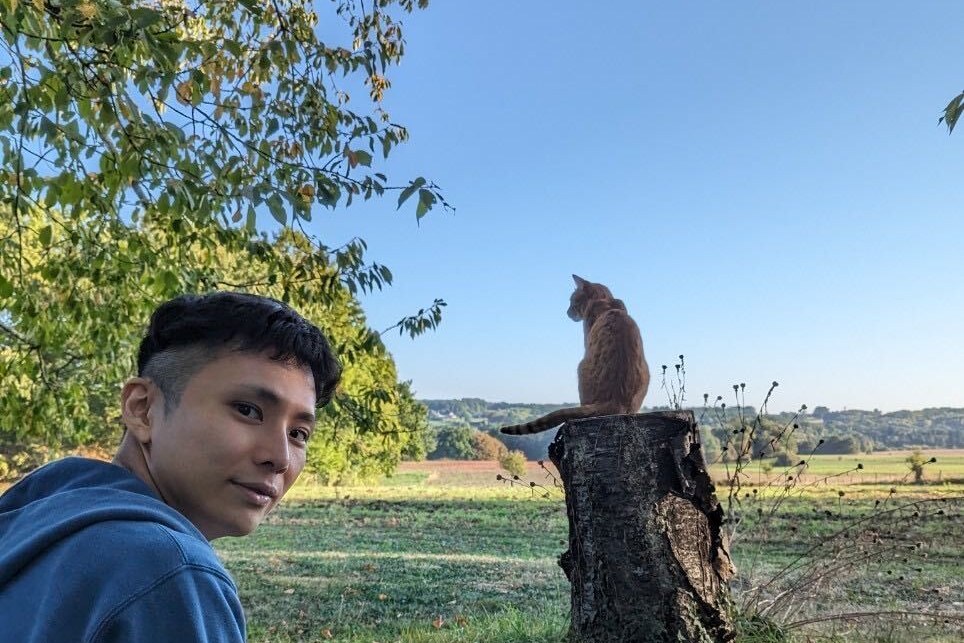
Interview overview
Ryosuke bet on a job title that barely existed two years earlier
After six-plus years across a manufacturer, Deloitte, and AWS in Japan, Ryosuke used Douglas College, a post-grad work permit, and a handmade AI app portfolio to land an emerging AI engineer role in Vancouver.
Ryosuke’s Japan résumé reads like a highlight reel—manufacturer engineering through a professor connection, Deloitte full-stack work on digital assets for consultants, then AWS—yet he kept choosing the builder seat over the glamorous pure-consulting track. Graduate school had aimed at consulting; missing the target firms is how engineering began. At the manufacturer, narrow domain focus eventually felt too small. Deloitte’s then-new engineering pod sat beside data science and design, taking consultant requests from proof-of-concept apps to scaled tools across wildly different clients. Roles blurred toward agile pairing of communicators and implementers; he stayed where hands still touched code because quality of life and the fun of making outweighed the sparkle peers chased.
Canada was a deliberate pause, not a rescue. He completed a two-year Douglas College program, secured a post-graduation work permit, and treated the school stretch partly as moratorium time to build rather than only to credential. English study earlier had even flirted with UBC master’s ambitions tied to big-data curiosity; the through-line is appetite for wider technical sightlines without abandoning implementation.
Job search for the role he holds started only about a month before graduation—late by anxious standards—because he refused to hunt as a business-intelligence, data, or AI candidate until a working app existed. Then he sent roughly 150 applications; a little over ten reached interviews, mostly firms grafting AI onto another industry or brand-new ventures rather than classic SaaS engineering mills.
The bet was temporal. AI engineer postings recited LLMs, LangChain or LangGraph, LangSmith-style observability, RAG—keywords for work that, he notes, scarcely existed two years prior. Interviews weighted system design and live walkthroughs of his own agentic app more than textbook coding drills. Demonstrating how the pieces fit became the differentiator. He calls it partly luck and partly reading a soft process before orthodoxy hardened.
The through-line from Deloitte and AWS is unchanged: ignore the air of prestige when it conflicts with the kind of work you actually want to wake up and do, then use portfolio proof when the market’s newest label still has no fixed exam.
He is careful not to universalize the portfolio miracle. Some Frog peers win on résumé discipline and interview mills; his cycle rewarded a demo because the role’s rituals were still soft. That is the strategic nugget: newborn titles can be entered sideways if you can narrate a system you built, not only answer questions written for yesterday’s job family. Douglas College and the PGWP bought the calendar space to notice the wave.
Nothing in the piece pretends the Deloitte or AWS logos were irrelevant; they opened rooms. What they did not do was pick his Canadian job title for him. He picked a newborn one, showed an app, and let the unfinished ritual of AI hiring work in his favor.
Photos from the interview
This page is an English overview of Frog’s Japanese interview—not a full translation. Read the original interview (Japanese)