

Interview overview
Senga on Timing, Healthcare Work, and the Cost of Waiting Too Long
After twelve years building the web in Japan, Senga crossed into Vancouver as a senior engineer—still wishing he had moved sooner.
Senga’s overseas itch started early. As a junior developer in Japan, a senior pointed him at English technical sites when he got stuck; he could barely read them, so he started learning. Books and magazines followed, and with them the sense that the hottest work was happening abroad. He spent about twelve years in web development—beginning in PHP backend when “frontend” was not yet a separate seat, working both sides, then specializing in frontend for roughly six years, often at smaller companies willing to hire people with no experience.
He is frank about education: he left high school unfinished. Reading about Lolipop founder Kazuma Ieiri, another high-school dropout who built a career, gave him courage. Canada still opened a door. English came less from classrooms than from tech reading, a first trip to Australia that proved broken English could still move a trip forward, grammar study after returning, and a Tokyo international share house where half the residents forced daily English conversation.
The United States was his first dream, but H-1B realities and degree barriers stalled him. Frog info sessions—after years of following Mana and Senna’s Vancouver writing—reframed Vancouver and B.C. immigration programs as a workable path. He enrolled at CICCC for a May-to-May study year while keeping a remote Japan job. His employer was flexible; meetings fell on Canadian evenings maybe once or twice a week. A lenient night instructor even let him skip most lectures and coast on the final project so he could keep shipping product work—and, for him, that flexibility mattered more than a strict classroom reputation.
Serious searching began in January and February before graduation. Early English interviews exposed gaps, so he added language classes. At a pre-COVID career fair he dropped a résumé at Amazon’s booth, got a callback, and asked for three months to study algorithms before his first real technical interview. COVID pushed graduation about three months later; he used the buffer for more study and applications. An oral-only offer from a U.S.-based company collapsed when the visa could not be secured. While he consulted COS on options, a Vancouver healthcare company came through—barely in time. He tallied about fifty-four applications as openings thinned, then slowly returned.
Day one was fully remote, which helped him listen carefully with headphones even when spoken English lagged. The product supported COVID-era symptom screening for large organizations such as universities; weekly regulation changes made the early months intense, far from the “easy Canadian workplace” lore he had heard. Later the pace settled. As a senior developer he still codes most of the day, covers backend and frontend, shares on-call, mentors co-op students from UBC and SFU, and joins hiring. Promotion, oddly, moved him from senior developer to senior developer—with a meaningful pay jump that still felt surprising after Japan’s tiny annual raises.
About three years in, he was mentoring other Frog members and weighing what comes next. His clearest regret is not technical: he waited too long because Japan work was fine. Seeing career changers and people who arrived via short Philippines English stays made him wish he had moved earlier—before COVID complicated everything. If remote Japan work is available, he still recommends bringing it with you.
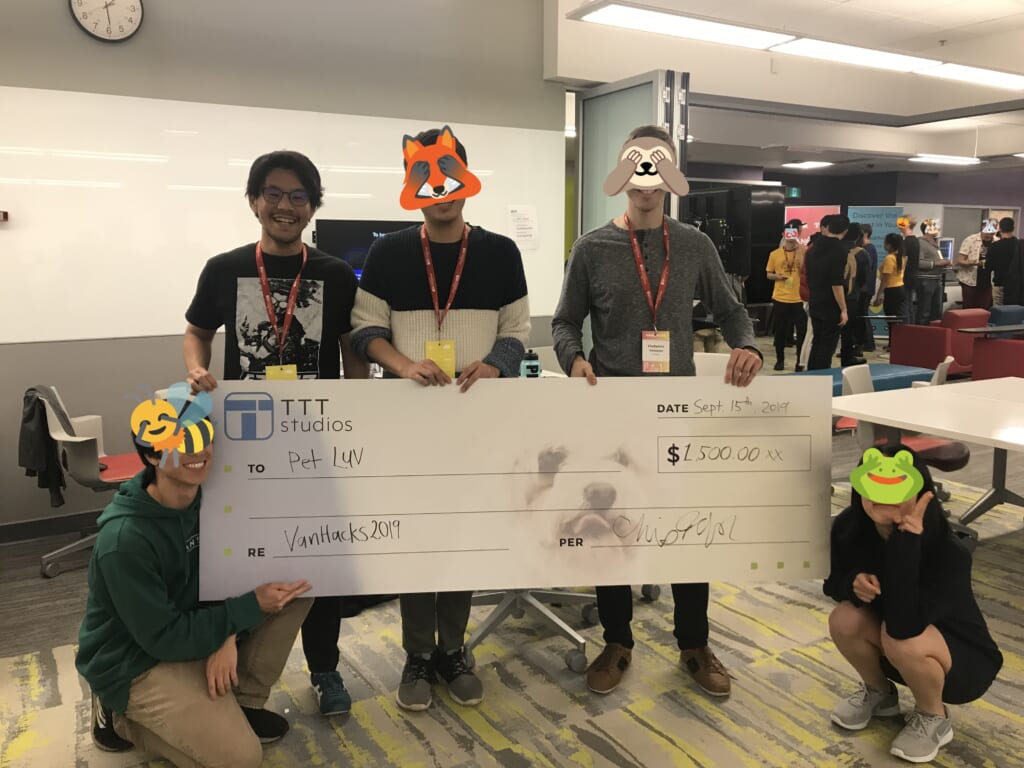
Hackathon memory softens the grind: school friends pulled him into VanHack in 2019, and a same-school team even took an award photo he still shares. Mentoring Kaori and answering Tomohiro’s questions later returned some of that community energy. The healthcare years did not begin as a mission choice, yet building something universities actually used during COVID reframed what “useful work” could feel like compared with flashier ad-tech daydreams.
Photos from the interview
This page is an English overview of Frog’s Japanese interview—not a full translation. Read the original interview (Japanese)