

Interview overview
From Japan classrooms to UBC and Amazon: Yao on dots that want to become a surface
Born in Japan to Chinese parents, schooled mostly at home, then graduated from UBC into Amazon as a new-grad engineer—Yao’s interview is less a victory lap than a careful look at what a big-company slice of work feels like three years in.
With Japanese speakers he goes by Yo; in this conversation he is Yao, a software engineer at Amazon who by October 2023 had been in the role for about three years. His path does not follow the usual Japan-industry-then-relocate arc. Attributes mark a college and university route and a background without a long Japan SE career before Amazon. The story starts earlier: born in Japan to Chinese parents who already held permanent residency, a brief childhood stretch in Canada when his mother pursued citizenship, then a return in late first grade and life in Japan through high school.
Those early Canadian years left almost no memory—he knows he was in elementary school and little else—but they left citizenship, and citizenship left tuition that was far more manageable than the international-student bill. Family pressure toward an overseas university was strong. Historically, leaving China for somewhere stable had been a familiar family calculus; Japan permanent residency and Canadian citizenship were the concrete outcomes. When application season came, he researched mostly on his own, with a cousin’s US-university experience as a base map: English scores gate which schools you can try, then you apply widely within budget and pick among offers. He received offers from the University of Ottawa and UBC and chose UBC, studying roughly 2016 to 2020. Rankings and the presence of science programs mattered more than a locked-in computer-science identity at the start.
Campus life mixed coursework with practice. He completed two internships, tutored at a programming academy, and joined a professor’s project because it beat a restaurant shift for skill building. One long Canadian summer—about four months, with no Japan trip planned—led him to Vancouver Community Network, an unglamorous local placement that still let him test what he was teaching himself outside class. Another summer he spent about two months at Gunosy in Tokyo: partly curiosity about Japanese work culture given his background, and partly because Canadian internship applications that year mostly failed and Gunosy was the offer that landed.
He prefers working face to face. Gunosy’s all-office rhythm suited him; Amazon’s COVID onboarding, heavy with remote days, did not. Messages replaced hallway questions, colleagues’ faces stayed fuzzy, and the feeling of building something in the same room was missing. By the interview he was hybrid—office about three days a week, roughly nine or ten until five or six, almost no overtime—and still a little nostalgic for that denser Tokyo summer, even while admitting two months can romanticize a workplace.
Hired as a new graduate in 2020, he was promoted in June 2023 from SDE1 to SDE2 without changing teams. In a company that size, he says, much of the year’s work is already sketched early, so the title shift changed expectations more than the project list: less scaffolding, more abstract upstream tasks, the assumption that you will fill in the blanks. He rates the pace as average or slightly slow versus peers and stresses advocating for harder assignments if you want the bar to move. Day to day he still works on software around trucks entering and leaving a warehouse—a niche slice of logistics where route planning and scheduling stay mostly out of view. As an engineer he feels he is growing; as someone sitting inside a business domain, he is less satisfied. Amazon’s relative ease of changing teams, he notes, creates healthy pressure between groups—even if he has not used that lever yet.
The stack is familiar Amazon fare: React on the front, Java on the back. Outside work he reads, pokes at popular tools such as Next.js, and once built a simple Flutter app inspired by SoftBank founder Masayoshi Son’s word-card brainstorming habit. Web3 pulls harder: he traveled to Toronto for a conference, published a smart contract to feel the mechanics, and watches AWS’s managed blockchain as a distant in-house echo of the space. Looking ahead two or three years, he wants wider ownership—startup included—and domains he chose rather than inherited. New-grad placement let him pick a city, not a team, and logistics was not a personal passion. Teammates on his squad tend to stay; company-wide, many leave around the one-year mark. Stability, parental leave norms, and a calm team culture are real. So is the itch to turn a single point of work into a broader surface—and to build enough financial room that interesting options are not blocked by salary fear alone.
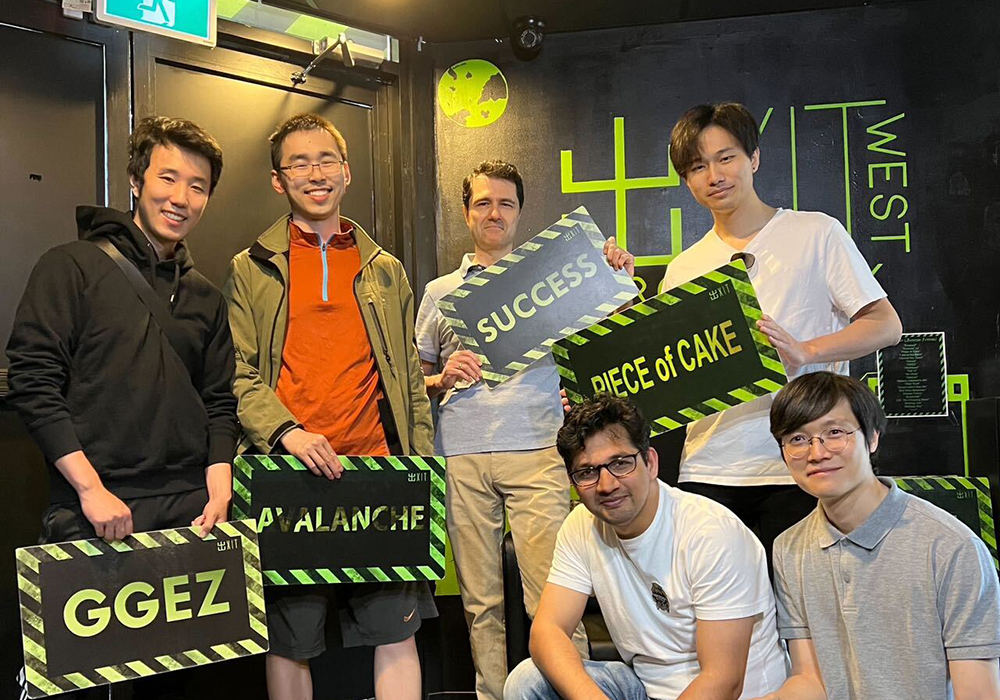
Photos from the interview

This page is an English overview of Frog’s Japanese interview—not a full translation. Read the original interview (Japanese)