

Interview overview
Yuji at Engine Digital: sports-English roots, a three-month hunt, and 3.5 years of half design, half frontend
A print-to-web designer who stretched into frontend in Japan used a short ITD path and a ruthless three-month search to land Engine Digital in Vancouver—then learned how hard native-speed collaboration really is.
Designers who stick full-time jobs in Vancouver are still a thinner crowd than engineers in Frog’s orbit, which is part of why Yuji’s interview leans less on school lore and more on what North American agency life asks of someone who already had craft. In his twenties at interview time, he had been a designer at Engine Digital—an agency with New York and Vancouver footing—for about three and a half years, after roughly nine months from arrival to offer on a college route.
Nothing in his origin story looks like a design-school pipeline. University was engineering, complete with C. His first job was DTP at a print company, learning Photoshop, Illustrator, and QuarkXPress. When digital work pulled harder, he joined a tiny three-or-four-person studio with no prior web design or coding—only loud motivation—and ended up estimating, designing, and coding himself. That messy breadth, he says, forged his working axis. Later he moved into a CyberAgent game-related subsidiary for concentrated design and art direction, then talked his way into frontend so he could stop saying “I can kind of ship WordPress pages” and start owning interaction more honestly. Around twenty-nine, a vague middle-school dream of working in North America suddenly felt like a last working-holiday window. Frog appeared on Twitter at the same awkward perfect moment.
English had been accumulating for years through obsession more than classrooms: NBA on English audio, English newspapers his father subscribed to, sitcoms and films in the original. At ITD he landed in the top English class; center-exam English had been near full marks. Speaking with classmates was manageable—few true natives besides teachers—and he mixed Japanese and international friendships without turning language into a purity contest. The school choice itself was Frog’s speed plan: ITD’s six-month course plus Co-op window (since discontinued), because he had experience, a limited budget, and no appetite for a long academic detour. Days were split hard—morning classes, then remote work for a Japan employer from about four until midnight in cafés with friends like roommate Ryohei.
When classes ended in late September, the Co-op clock pointed at December. He quit the Japan remote work and ran a three-month campaign: October for target lists and a clean portfolio, November for prioritized applications starting from dream firms rather than safety schools. Responses crawled. Mid-November he settled into two or three carefully tailored packets a day—LinkedIn, résumé, and the long questionnaires some studios demand—and refused to drop that pace. Engine sat in his top five and had gone silent after he applied. Then in early December the chief creative officer emailed: looking at your portfolio, interested? Yuji replied that he had already applied; the CCO found the materials on a desk. A formal offer landed mid-December, just inside the Co-op line—the first official offer among several advancing processes, from a studio that had even built an NBA app. Perfect thematic fit.
Hiring was not one template. Engine’s path for him ran CCO conversation into leaders’ interviews, with culture-fit personality screens in the mix; another company put him through phone screen, interview, multi-part branding-and-build assignments, and an English presentation he practiced aloud from the shower. He failed that final on code quality and still valued the blunt feedback. At Engine the real shock was language density: everyone else’s first language was English. Year one phone meetings were muddy; casual banter lagged; some days simply going to the office hurt because he could not laugh with colleagues at full speed. He doubts English will ever feel native even after a decade, yet he can measure how far the job has dragged him forward.
Work splits roughly half design and half frontend—not backend—recently including e-commerce UX such as order-history improvements, sometimes sketching with a UX partner for an hour before he finishes the design and implements it. New tools arrive by project need: Sketch, Shopify, Vue.js, learn-in-public. Biweekly one-on-ones and annual anonymous peer comments keep expectations calibrated to what he can actually do. Project kickoffs are serious: full-team risk and stakeholder scrubbing, Post-it roadmaps, budget negotiation through a PM who balances field reality and the contract. Pay, he says without naming a number, sits clearly above Japan levels. His advice to experienced designers is blunt: squeeze craft and English in Japan before you land, then expect the first years abroad to punish communication pride more than tool skill.
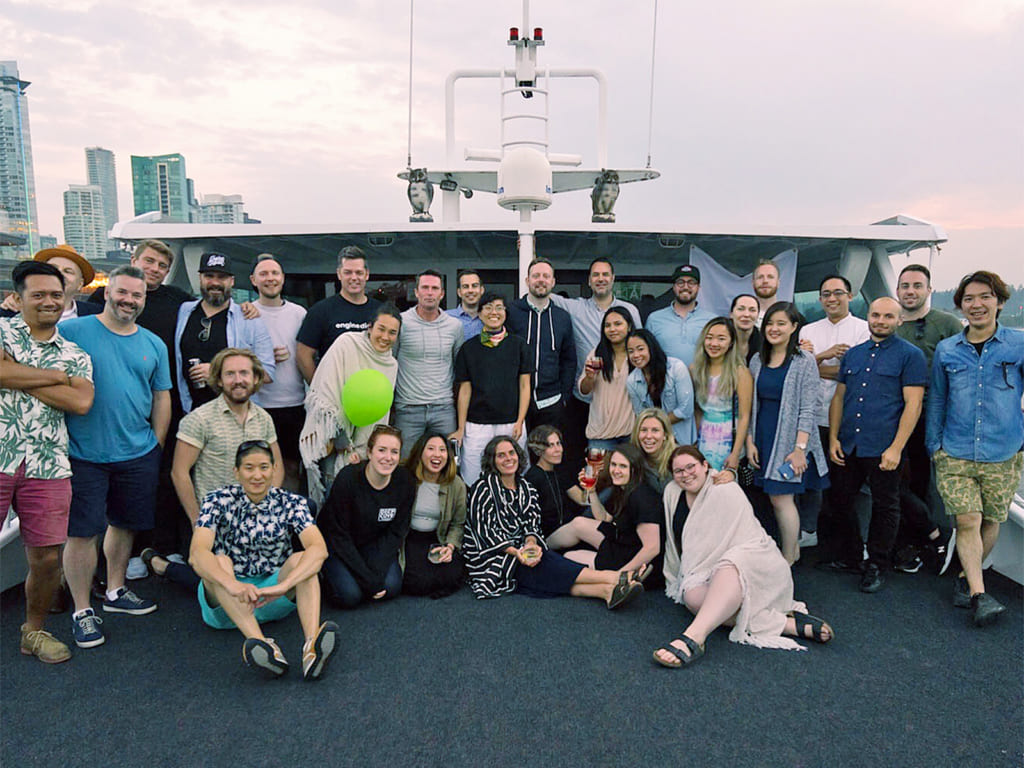
Photos from the interview




This page is an English overview of Frog’s Japanese interview—not a full translation. Read the original interview (Japanese)