

Interview overview
Yuto’s late pivot: from a WHV-only gamble to Upwork, full-time, and a second Vancouver offer
A four-year Japan frontend engineer nearly flew to Canada on a working-holiday-only permanent-residence plan—then, one month before departure, rewrote the whole strategy. Within months of landing he was freelancing, studying UI/UX, and already lined up for a local job change.
Yuto did not become an engineer by accident. After a junior-high school trip to Britain where he communicated with gestures when he could not speak English—and found it thrilling—he later spent working-holiday time in Australia and New Zealand around age twenty or twenty-one. By the time he returned to Japan he was already set on building a career that could support life abroad and a path toward permanent residence. He tried design and writing freelance work first and found it a poor fit; engineering, by contrast, clicked. He studied in a non-engineering program at Waseda University’s School of Culture, Media and Society, then spent about four years primarily as a web frontend engineer at a major corporate-group company—not a household mega-brand—while also touching backend and some product-management work. English was already strong when he reached Canada, shaped by those earlier working-holiday years; his working-holiday entitlement itself had already been used before this move.
Canada won out over other destinations mainly on visa strategy. New Zealand had been an early permanent-residence idea, but he had already used a working holiday there, which made starting from a work visa look difficult. Germany—Berlin in particular—tempted him with talk that English alone might suffice, yet job postings routinely asked for some German, and he preferred to invest time in technical skill rather than language study. Vancouver offered a mix of nature and city life that felt similar to New Zealand, with institutions that made it easier for foreigners to work. His original plan, though, was blunt: fly on a working holiday and chase permanent residence without school.
That plan almost happened. By March 2024 his flight was booked and he had already quit his job. About a month before arrival he contacted Frog almost as an afterthought. Counseling and a concrete points calculation showed that a working-holiday-only route would leave him needing employment from day one to accumulate enough permanent-residence points—something far less certain than his optimistic reading of a tourist-visa buffer. He reversed course and enrolled in college instead. Tuition came from money originally earmarked for the working holiday; that left a hole in living costs, so he spent about three months freelancing from Thailand and Vietnam to keep burn low before a September program start. Landing that first overseas freelance work took roughly three weeks. He is candid that the sequence was a gamble—remote Japan work from Southeast Asia was scarcer than he expected—and he would not recommend copying it casually.
At CICCC he chose the roughly six-month UI/UX track rather than web development he already knew, reasoning that design was the natural adjacent skill for a frontend engineer. He rated the course a perfect score: output-heavy classes, approachable instructors, and Figma skills he soon applied on real freelance design tasks. The cohort of about twenty included roughly seven Japanese students; only two were Frog members—himself and someone named Ken. School job introductions existed but felt thinner than expected, and he sensed that complete design beginners would struggle to land through that channel. His broader visa scaffold was roughly six months of study, six months of co-op, and a year of working holiday.
He arrived in Vancouver around late August. Part-time postings were scarce enough to feel bleak at first, so he cast a wide net—including café work—while also building an Upwork presence with a heavily tuned portfolio and profile SEO. An inbound offer from a Vancouver company arrived in about three weeks. The client sent roughly fifty questions; he nearly walked away, then spent about three hours answering every one. The work mixed web frontend with Figma design on an MVP chat application using WebSockets in a Discord-like style. For a stretch the company was just him and the CEO. He was already working by September, carrying continuous contract work while studying.
Full-time job hunting ran in parallel. In February he joined a Frog resume event, rebuilt a master English résumé from his full history, and applied heavily in March. Replies were quiet until April, when companies he had contacted in March answered in a sudden wave. That same month his freelance relationship converted to full-time employment; he had been in that full-time seat for about a month by the interview, roughly eight months after arriving in Canada. Another local company that had responded in April also extended an offer, and he was set to start there in mid-May—already on the verge of a second local move. The arc is less a tidy résumé than a series of late corrections: abandoning a working-holiday-only fantasy, buying time in Southeast Asia, adding design at school, and turning early Upwork traction into full-time work while the local market finally opened.
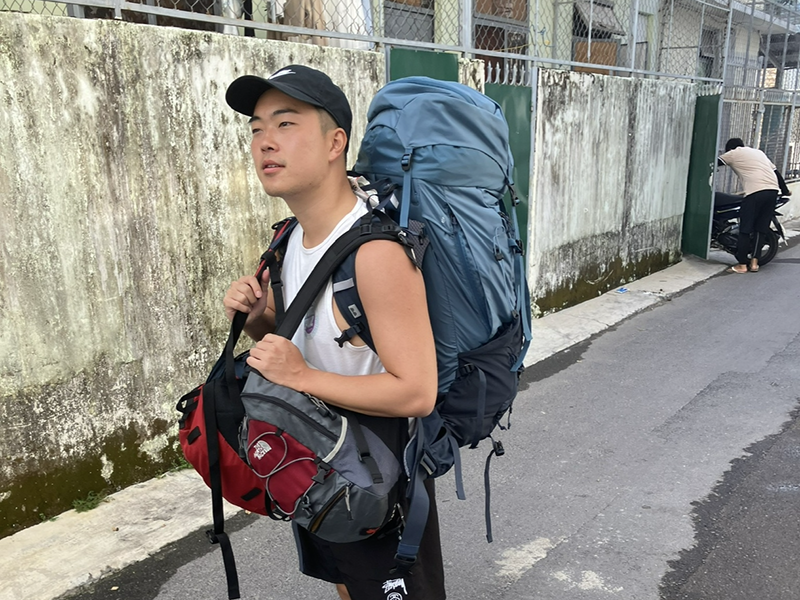
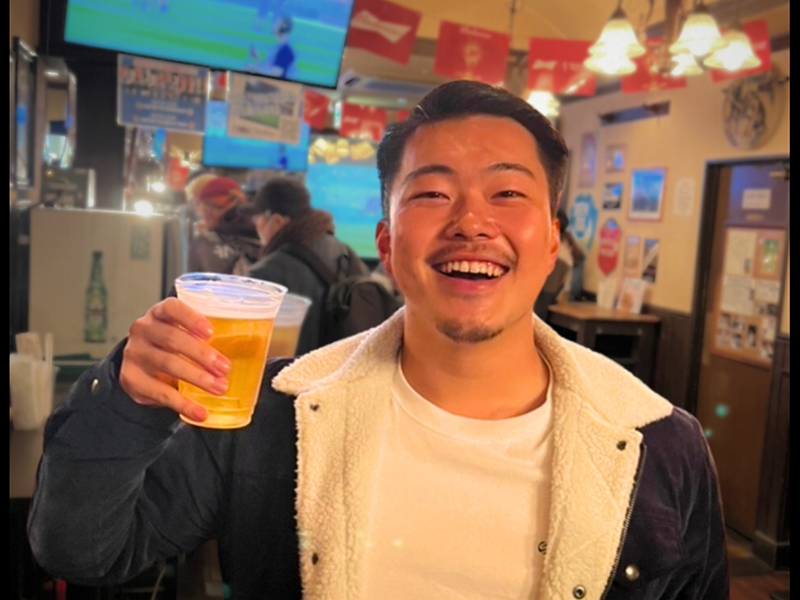
Photos from the interview
This page is an English overview of Frog’s Japanese interview—not a full translation. Read the original interview (Japanese)